
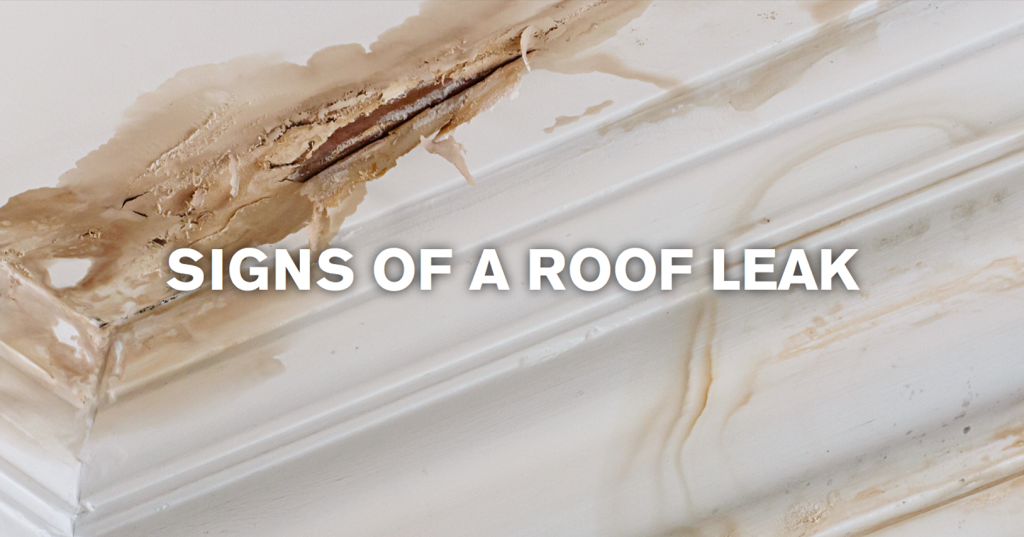
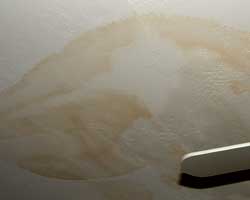
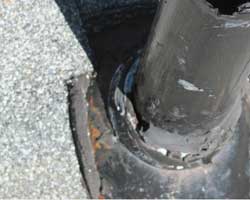
Knowing you have a roof leak is usually obvious when you see the water spot on your ceiling. However, it can be much harder to pinpoint the cause of the leak. You may assume your shingles are at fault, but it could be missing flashing around a chimney, or some other entry point, that’s allowing the water to get inside your attic. Once inside the attic, water can travel along rafters and other horizontal surfaces making it difficult to find the exact entry point.
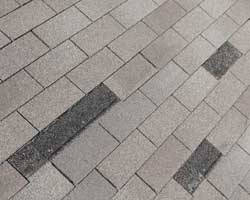
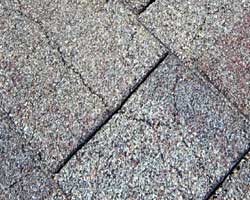
If shingles are missing, cracked or otherwise damaged, water can, over time, begin to leak into the home. A leak can start out small and slowly cause a lot of damage if a warning sign is ignored.
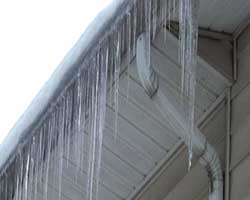
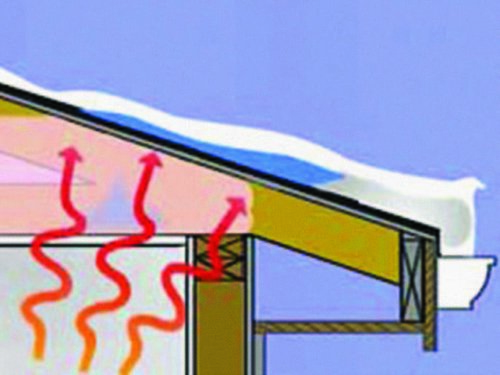
Water entry can also be caused by an ice dam. Ice dams are formed by the continual thawing of snow over the warmer portions of the roof and refreezing over the cold eave. The ice dam can cause water to back up under shingles. If your roof doesn’t have an ice & water underlayment installed under the shingles, you could be experiencing leaks.
Contact us if you need to have a professional roofing contractor help diagnose your leak issue. We can help determine the cause of the leak and help in finding a solution.
Potential signs of a leak:
- Water spots on your ceiling or walls.
- Missing shingles.
- Cracked or damaged shingles.
- Missing or damaged flashing or boot covers to roof penetrations.
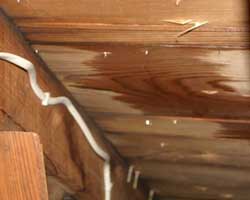
- Water spots or wet roof decking (seen through the attic).
Neighborhood Roofing is an Independent Contractor, not an Employee or Agent of Owens Corning. See the full article.